

This growing movement is working to address burning questions like how to reduce the cost of housing in Europe, improve democracy and participation and drive forward the clean transition. And this is only possible by working with and for people.
“That is what the New European Bauhaus is all about,” she explained.
Affordable housing is a key concern for 40% of European citizens, according to a 2025 Eurobarometer poll by the European Commission. Many NEB projects focus on building sustainable and inclusive solutions for homes and communities.
President von der Leyen gave as an example the De Flat Kleiburg project in the Netherlands, in which a block earmarked for demolition was saved and a thriving community built by allowing residents to finish the renovation of the flats themselves.
“By giving residents control, the project reduced delays and reduced costs. The result was housing that was affordable, fast, functioning, and fit for purpose,” said von der Leyen.
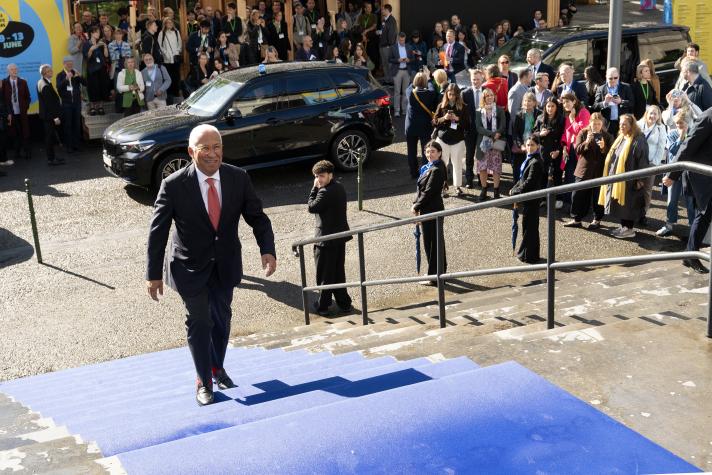
“The lack of affordable housing is at the core of people’s disillusionment with democratic institutions,” European Council President Antonio Costa told opening ceremony attendees. “Given the magnitude of the challenges, we must continue to act together at every level to restore access to affordable and sustainable housing for every citizen.”
“We count on the collective inspiration, imagination and creativity of all the New European Bauhaus communities and projects,” he added.
Community solutions
Since its launch in 2020, the New European Bauhaus has grown to a vibrant movement with more than 2 000 members across Europe and beyond. Almost €1.4 billion has been allocated to NEB from 2021-2027, with most of the funding coming from cohesion policy and the Horizon Europe programme.
One of the core principles of the New European Bauhaus movement is participation, helping citizens to play a role in building their communities.
This includes making a tangible difference in Ukraine, where community solutions are helping to rebuild the country following Russia’s full-scale invasion in 2022.
This is part of a broader growth in public participation in the country, according to Hanna Bondar, a Ukrainian architect and Member of the Ukrainian Parliament. “During this war – I am Ukrainian, I am from Kyiv, I have lived all my life in Ukraine – I have never seen such cohesion between people,” she said during a discussion at the opening ceremony, adding that the country was working to ensure people participate in the recovery process.
A model for this is the TEPLO Project, a Soviet-era building that was retrofitted using bio-based materials such as straw and wood, reducing heating needs while also involving the local community.
“The New European Bauhaus is a remarkable achievement because it connects areas that are too often treated separately – climate policy, culture, design, architecture, innovation, education, industry, social inclusion and, most importantly, democratic participation,” said Nela Riehl, Member of the European Parliament and chair of the Parliament’s Committee on Culture and Education.
NEB values also mean involving all parts of society, including disadvantaged groups, such as people with disabilities or from immigrant communities, in transforming and co-designing living spaces.
To illustrate the inclusiveness of NEB values, the opening ceremony also featured singing by children from disadvantaged backgrounds, as well as a sign-language choir.
European society still needs to do more to put people at the heart of planning, said Helle Søholt, co-founder of Gehl, an urban strategy and design consultancy.
“We need social resiliency in Europe, in our cities, more than ever. We do not yet have all the structures in place that ensure a holistic approach to sustainability, where people are really at the heart of planning.”
Festival of the New European Bauhaus
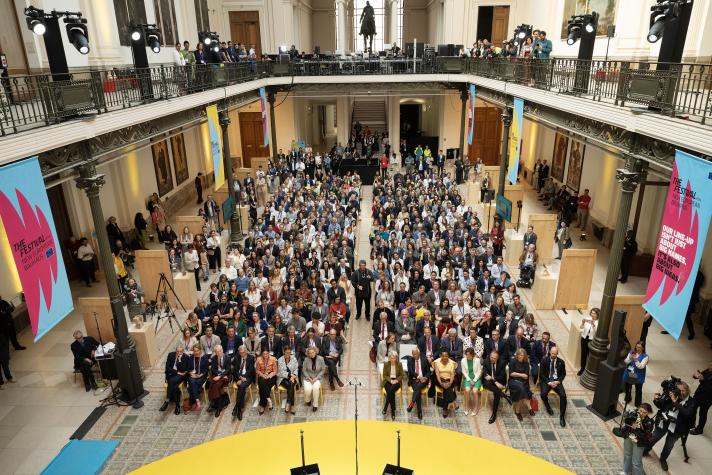
The third Festival of the New European Bauhaus takes place in Brussels from 9 to 13 June and comes at a critical moment.
The event marks a scale-up phase for the NEB movement, encouraging the broader adoption of the know-how and innovations developed over the past six years. Such projects include Biosphere Solar, a Dutch start-up which designs photovoltaic panels that are repairable and recyclable, and Äerd Lab, which created 3D-printed bricks that combine clay and construction waste.
In December 2025, a new strategy for scaling the movement up was adopted by the European Commission as part of a European Affordable Housing package. In May this year, the Council of the European Union urged countries to integrate NEB values into their national policies and funding instruments.
Over the next four days, citizens, designers, architects, artists, engineers, businesses, researchers and decision-makers will come together in Brussels’ Parc du Cinquantenaire to work out how to scale up the innovative solutions being driven by the NEB movement, helping Europe to build a more competitive, circular economy.
“When people act together, they build trust,” President Ursula von der Leyen said. “And stronger communities make stronger democracies.”
- Publication date
- 10 June 2026
- Author
- Joint Research Centre